

At Kensington International Clinic, osteopathy is an integral part of how we approach health. Located in the heart of London, minutes from South Kensington and Knightsbridge, our private clinic brings together practitioners trained in France and the United Kingdom, united by a shared commitment to rigorous, personalised and attentive care.
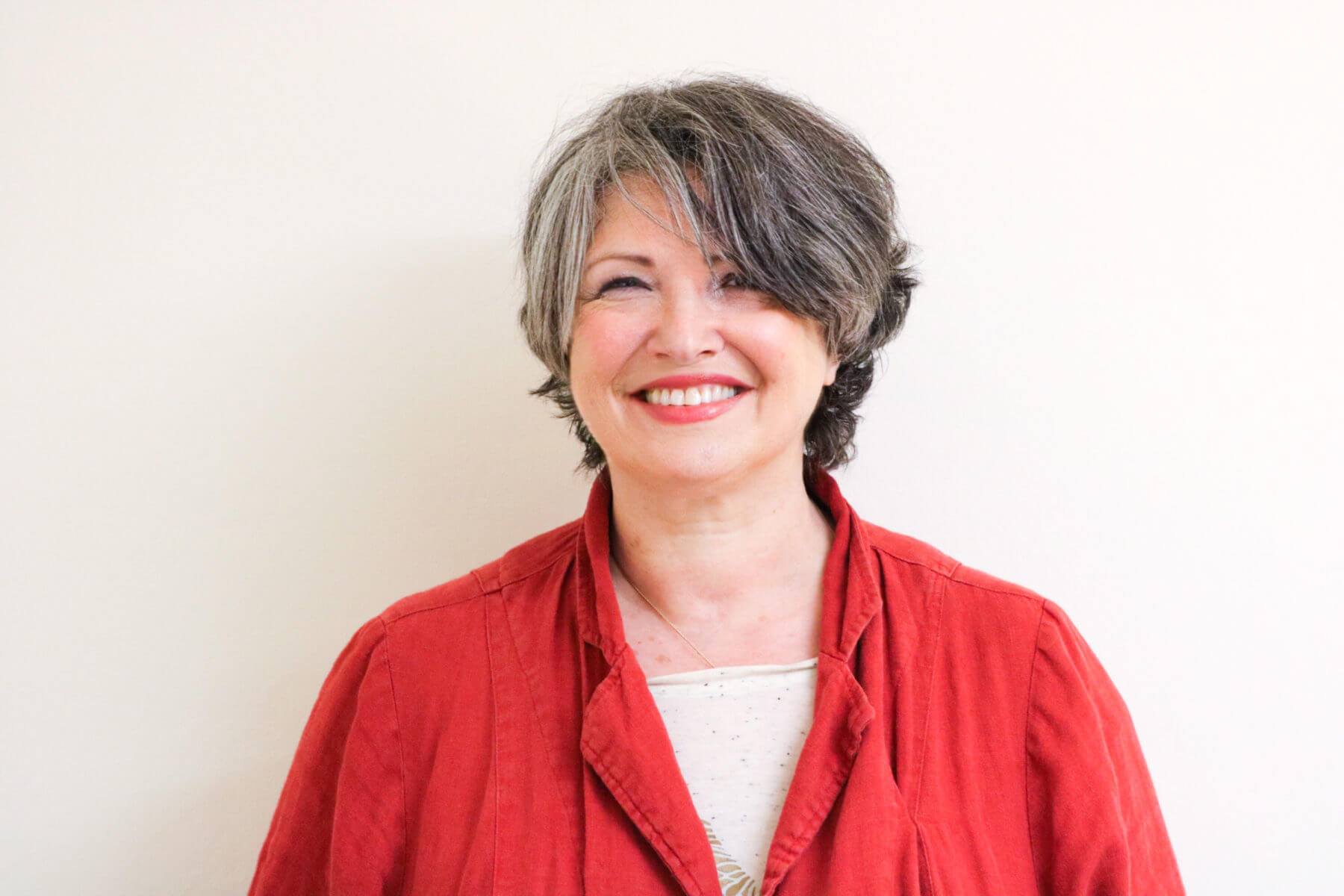
Our osteopathy consultations are led by Corinne Fédevieille, a French osteopath registered with the General Osteopathic Council, whose expertise spans general, cranial, visceral and paediatric osteopathy. Whether you are dealing with chronic pain, stress-related tension or seeking support for your infant, Corinne tailors every treatment to your individual situation and needs.
Meet Corinne Fédevieille, your
French osteopath in London
Training and professional registration
A graduate of the College of Osteopaths at Middlesex University, Corinne Fédevieille is a fully registered osteopath listed with the General Osteopathic Council (GOsC no. 5633). She is also a member of the Institute of Osteopathy (iO) and the UFOF (Union of French-Trained Osteopaths): three professional affiliations that reflect a standard of practice recognised on both sides of the Channel.
Established in London since 2004, Corinne built her early practice working with clients from the media and advertising industries, an environment that gave her deep expertise in treating patients dealing with high levels of professional stress.
Cranial, visceral and specialist approaches
Beyond general osteopathy, Corinne has developed advanced expertise in cranial and visceral osteopathy through extensive postgraduate training with Jean-Pierre Barral, one of the world’s foremost authorities in visceral manipulation. Her additional qualifications cover somato-emotional release, neural and vascular manipulation, fascia manipulation, paediatric osteopathy and biodynamics, the latter studied with Dr Jim Jealous in the United States.
She also has a particular interest in energetic osteopathy, a complementary approach that considers the body in its entirety, beyond purely structural mechanics. This breadth of technique allows her to adapt precisely to each patient: whether an adult with chronic pain, a pregnant woman or a newborn.
What to expect during an osteopathy consultation
Your first consultation (45 minutes)
Your first consultation lasts 45 minutes and begins with a thorough case history: Corinne takes time to understand your medical background, lifestyle, and the precise nature of your symptoms. This listening phase is fundamental, as osteopathy treats the patient as a whole rather than addressing symptoms in isolation.
The assessment follows: postural analysis, evaluation of joint mobility and tissue tension, palpation of musculoskeletal, visceral and cranial structures as appropriate. Treatment begins within the same session, using techniques suited to your condition: gentle mobilisations, structural manipulation, cranial or visceral techniques. At the end of the appointment, Corinne shares her observations and, where relevant, postural advice or exercises to support your progress between sessions.
Follow-up consultations and last-minute bookings
Follow-up sessions also last 45 minutes. Their frequency depends on your situation: some patients benefit from two or three closely spaced sessions during an acute phase, while others prefer regular appointments as a preventive measure. Corinne adapts her approach at each session based on how your body is responding and your own feedback.
For patients who need urgent care, Kensington Clinic offers same-day last-minute appointments booked directly through reception, a level of flexibility that is genuinely rare in London’s private healthcare sector.
What is an osteopath and what does osteopathy treat ?
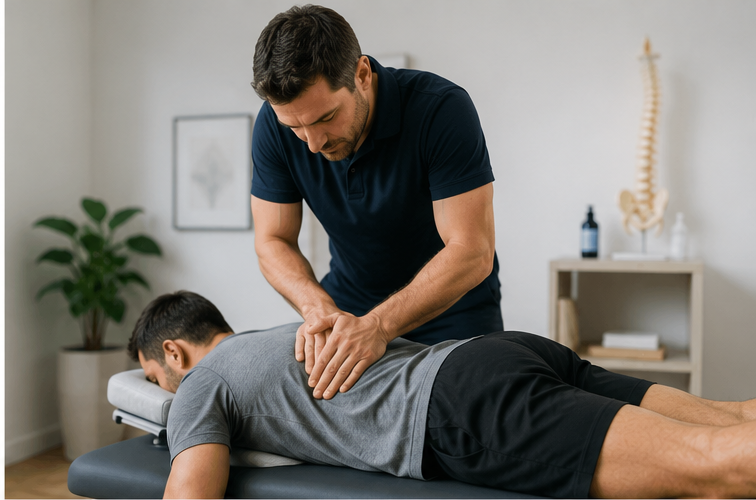
Osteopathy is a manual healthcare discipline based on the principle that the body’s structure and function are deeply interconnected. When any part of the body loses its mobility, whether a joint, a muscle, an organ or connective tissue, this can generate tension, compensatory patterns and pain that may appear far from the original source.
An osteopath works with their hands to identify and address these mobility restrictions. The approach is holistic: rather than treating only the painful area, the osteopath seeks to understand why that area is under strain and which surrounding structures are contributing. Techniques vary according to the patient and the condition, ranging from structural manipulation and myofascial release to craniosacral therapy, visceral work and manual lymphatic drainage.
Osteopathic treatment is suitable for both acute and chronic conditions, and integrates well alongside medical or physiotherapy care.
Osteopathy consultation fees in London
We believe in full transparency around our fees. Here is a complete breakdown of Corinne Fédevieille’s rates:
Osteopathy
Consultation | Duration | Fee |
First consultation | 45 minutes | £130 |
Follow-up consultation | 45 minutes | £110 |
Manual lymphatic drainage
Consultation | Duration | Fee |
Individual session | 60 minutes | £120 |
Package of 4 sessions | / | £440 |
Massage
Consultation | Duration | Fee |
Massage | 30 minutes | £65 |
Massage | 45 minutes | £85 |
Massage | 60 minutes | £105 |
Booking: a prepayment of £70 is required at the time of booking. The remaining balance is settled on the day of the appointment. Full refund for cancellations made more than 72 hours in advance.
Cancellation policy:
- More than 72 hours in advance: full refund
- Between 48 and 72 hours: the £70 prepayment is retained
- Less than 48 hours: the full consultation fee is charged
Private health insurance may cover part or all of your osteopathy consultation. We recommend checking directly with your insurer before your appointment.
Who can benefit from osteopathic treatment ?
Osteopathy at Kensington Clinic addresses a wide range of conditions, from acute pain to chronic imbalances. Here are the most common reasons patients come to see Corinne:
Back pain, neck pain and sciatica
Back pain is one of the most frequent reasons patients seek osteopathic care. Whether you are dealing with acute lower back pain, persistent neck tension, a disc problem or sciatica, osteopathic treatment works to reduce muscular tension, restore joint mobility and decompress the nerve structures involved.
The aim is not only to relieve pain but to identify and address the mechanical causes that are sustaining it.
Stress, tension and headaches
Chronic stress leaves physical traces throughout the body: neck and shoulder tension, jaw clenching, restricted breathing, recurring headaches. Osteopathy works directly on these physical manifestations, releasing deep-seated tension and restoring fluid movement.
Digestive complaints and visceral osteopathy
Visceral osteopathy addresses mobility restrictions in the abdominal and pelvic organs: the colon, liver, stomach, small intestine and uterus. Visceral tension can underlie bloating, acid reflux, chronic constipation, pelvic pain and certain digestive discomforts with no identifiable organic cause.
Pregnancy and post-natal recovery
Pregnancy places intense demands on the body: a shifting centre of gravity, ligament laxity, pressure on the sacrum and pelvic floor. Osteopathy supports expectant mothers throughout pregnancy, relieving pelvic pain, lower back discomfort, rib tension and helping to optimise pelvic mobility ahead of delivery.
In the post-natal period, it supports structural recovery, particularly around the pelvic floor, sacrum and shoulder girdle.
Cranial osteopathy for babies and infants
Newborns can carry cranial tension resulting from the birth process, which may present as unexplained crying, feeding difficulties, a positional preference or disturbed sleep. Paediatric cranial osteopathy, performed with exceptionally gentle touch, allows these micro-restrictions to be detected and resolved without discomfort to the baby.
Sports injuries and recovery
Athletes at every level are exposed to muscular imbalances, chronic tension and recurring injuries linked to repetitive movement patterns. Osteopathy supports recovery by restoring mobility in affected areas, preventing postural compensation and accompanying a gradual return to training. It also works well as a preventive measure, addressing structural imbalances before they develop into pain.
Osteopath, physiotherapist or chiropractor: which is right for you?
Osteopath or physiotherapist?
- A physiotherapist focuses primarily on functional rehabilitation: muscle strengthening, recovery following surgery or injury, and the treatment of specific conditions on medical referral.
- An osteopath takes a broader view, identifying and addressing the structural imbalances underlying pain or dysfunction, without requiring a referral.
The two approaches are complementary and often work well in combination, particularly after complex surgery or sports injuries.
Osteopath or chiropractor?
Osteopathy and chiropractic share a manual approach to the body but differ in philosophy and technique.
- Chiropractors focus primarily on the spine and use high-velocity spinal manipulation.
- Osteopaths work across the whole body, including the viscera, cranium and fascial system, drawing on a broader range of techniques.
For patients seeking a whole-body approach that integrates cranial, visceral or paediatric work, osteopathy is often the better fit.