

Specialist consultation
Digestive disorders are among the most common reasons for seeking medical advice. And yet, they are often dismissed as minor. Behind an apparently harmless symptom may lie a condition that warrants a specialist’s opinion.
Kensington Clinic is a private practice based in London, close to South Kensington and Knightsbridge. Our team brings together four consultants with complementary areas of expertise. This breadth of sub-specialties is rare for a private clinic of this size. It builds on our partnership with LGCL (Leaders in Gastrointestinal Care London), a consortium recognised across the United Kingdom for the excellence of its digestive care.
Booking a private gastroenterologist in London at Kensington Clinic means accessing prompt, multidisciplinary medical care. Our consultations are available in English, French and Arabic, depending on the practitioner. We offer in-person and remote appointments, with consultation times adapted to each situation.
Meet our team of
consultant gastroenterologists in London
Our four consultants also practise at leading London hospitals: Royal Free, Imperial College (Hammersmith), St Mark’s Hospital, Barnet & Chase Farm. Each brings a distinct clinical sub-specialty, which allows us to direct patients to the practitioner best suited to their condition.
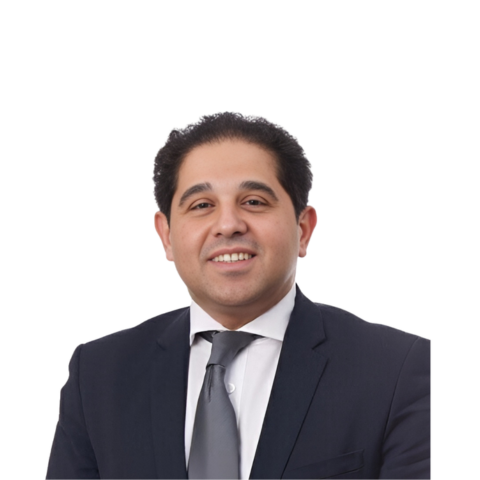
Dr Akeel Alisa, senior consultant hepato-gastroenterologist
Dr Akeel Alisa graduated in medicine from the University of Cambridge in 1993, and later earned his Fellowship of the Royal College of Physicians (FRCP London).
Founder of LGCL, he is also medical director of the gastroenterology centre of excellence at Kensington Clinic. He practises within the Royal Free NHS Foundation Trust as well.
His sub-specialties cover general gastroenterology, hepatology, and diagnostic and therapeutic endoscopy.
Consultations are available in English and Arabic.

Dr David Simon, French gastroenterologist in London
Dr David Simon is a consultant and advanced endoscopist at Imperial College Healthcare NHS Trust.
Trained at Saint-Antoine Hospital in Paris and then at the Sorbonne, he completed his senior fellowship in hepato-pancreato-biliary (HPB) endoscopy at Hammersmith Hospital. His dual Franco-British training makes him a natural point of contact for London’s French-speaking community.
His expertise focuses on complex biliary and pancreatic conditions: gallstones, pancreatic cysts, pancreatitis, jaundice, and bile duct strictures. He performs more than 1,000 endoscopic procedures each year, with an approach that favours minimally invasive techniques.

Dr Noriko Suzuki, female consultant gastroenterologist and endoscopist in London
Dr Noriko Suzuki offers a rare profile for patients seeking a female gastroenterologist in London.
Trained at Osaka City University in Japan, she has been on the staff at St Mark’s Hospital since 1998. She has practised there as Honorary Consultant Specialist Endoscopist since 2004.
Internationally recognised for her expertise in therapeutic endoscopy, she specialises in endoscopic submucosal dissection (ESD). This minimally invasive technique allows certain pre-cancerous lesions to be treated without resorting to surgery.
A member of the NICE committee and technical lead of the BSG ESD interest group, she has published more than 70 articles in leading international journals. Her approach places a strong emphasis on patient comfort.

Dr Owen Woghiren, consultant in IBD and clinical nutrition
Dr Owen Woghiren is a consultant and general physician (MBBS FRCP, GMC 4555968). Trained at Hammersmith, Chelsea and Westminster and St Mary’s Hospital, he obtained his CCT in gastroenterology and general internal medicine in 2009. He is also JAG-accredited in endoscopy.
He currently serves as clinical lead for gastroenterology and endoscopy at Barnet and Chase Farm Hospital (Royal Free NHS Foundation Trust). His sub-specialties cover inflammatory bowel disease, digestive infections, dyspepsia, and clinical nutrition. He performs more than 1,000 endoscopies each year.
What does a gastroenterologist do?
A gastroenterologist is the medical specialist for conditions affecting the digestive tract and its associated organs, including the liver, bile ducts and pancreas. Their scope of practice covers diagnosis, medical treatment, and endoscopic procedures, depending on their sub-specialty.
In practice, this consultant intervenes across several areas:
- Investigating digestive symptoms whose cause is not immediately identifiable;
- Establishing a diagnosis based on clinical examination, blood tests and functional tests (breath, microbiological, hormonal) ;
- Prescribing endoscopic investigations or abdominal imaging when indicated;
- Setting up an appropriate treatment strategy (medication, nutritional adjustments or endoscopic procedures) ;
- Referring patients to a digestive surgeon when necessary;
- Providing long-term follow-up for chronic digestive and liver conditions.
In practice, booking a private specialist usually means getting an appointment within a few days, compared to several weeks in the public system. This speed of access often proves decisive when a symptom needs to be investigated without delay.
Why would I be referred to a gastroenterologist?
There are many reasons to consult a gastroenterologist. Some symptoms should be reported to a specialist without delay, as they may indicate a condition requiring investigation.
Below are the main categories of symptoms to tell a gastroenterologist about, along with the clinical situations that warrant specialist advice:
SYMPTOMS / CONDITIONS / SITUATIONS | MANIFESTATIONS AND SITUATIONS |
Upper digestive symptoms | Chronic indigestion; difficulty swallowing (dysphagia) ; epigastric pain; frequent belching; heartburn; persistent acid reflux; recurrent nausea |
Lower digestive symptoms | Alternating constipation and diarrhoea; blood in stools; chronic bloating; faecal urgency; mucus in stools; recurrent abdominal pain; unintended weight loss |
Known chronic conditions | Coeliac disease; GORD (gastro-oesophageal reflux disease) ; IBD (Crohn’s disease, ulcerative colitis) ; lactose or fructose intolerance; SIBO (small intestinal bacterial overgrowth) |
Liver, pancreas and bile ducts | Abnormal liver blood tests; fatty liver disease; history of acute or chronic pancreatitis; suspected gallstones or obstruction; viral or autoimmune hepatitis |
Screening and prevention | Family history of colorectal or gastric cancer; positive FIT test; surveillance of previously resected polyps; warning symptoms after the age of 45 |
This list is not exhaustive. When in doubt about a symptom, seeing a specialist shortens the path to diagnosis and ensures prompt, appropriate care.
What does a gastroenterologist do on the first visit ?
The first consultation lasts between 20 and 30 minutes, depending on the practitioner. It can extend to 45 to 60 minutes in the case of an extended consultation, when the clinical situation requires it. This consultation is structured around four consecutive stages.
1. In-depth digestive history
The specialist collects your symptoms in detail: nature, location, duration, pattern of onset, triggers and relieving factors, and impact on daily life. They review your medical and surgical history, current medication, dietary habits, alcohol intake, and family history of digestive conditions.
2. Focused clinical examination
Depending on the reason for consultation, the consultant performs an abdominal examination (palpation, percussion, auscultation), complemented where necessary by a proctological or cardio-pulmonary examination. The aim is to identify clinical signs that may guide the diagnosis or justify further investigations.
3. Investigation plan
Based on the suspected diagnosis, the specialist may prescribe blood tests or breath tests. Other investigations are possible: microbiological studies, abdominal imaging, upper or lower endoscopy. These examinations can be carried out directly at Kensington Clinic or through our partnership with LGCL, which limits gaps in the care pathway.
4. Summary and treatment plan
At the end of the consultation, you leave with a clear explanation of your situation and either an investigation plan or a treatment plan. A prescription is provided if necessary, together with a scheduled follow-up appointment. Results of examinations carried out at the clinic are generally communicated quickly, allowing care to progress without unnecessary waiting time.
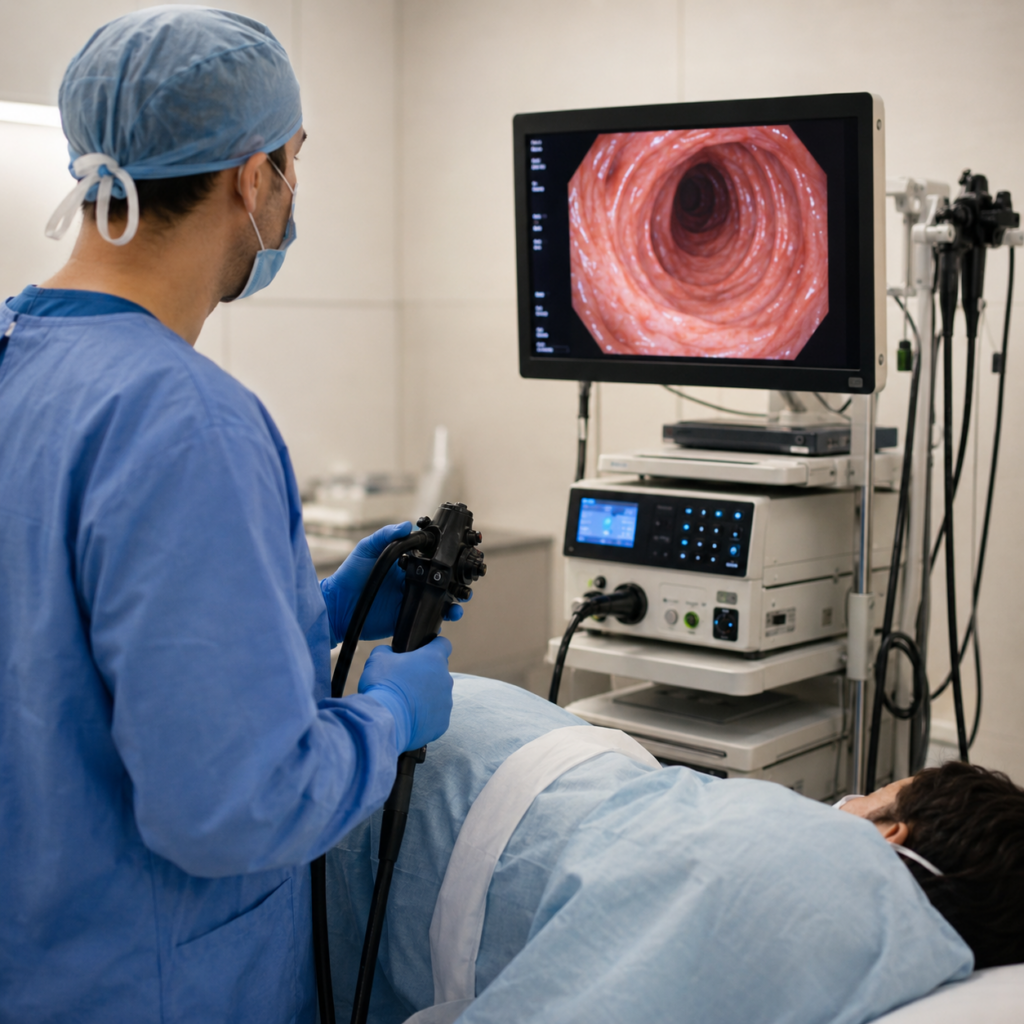
A gastroenterology centre of excellence: our partnership with LGCL
Since 2022, Kensington Clinic has hosted a gastroenterology centre in partnership with LGCL (Leaders in Gastrointestinal Care London). This consortium of specialists is recognised across the United Kingdom. This partnership shapes our positioning: every Kensington Clinic patient benefits from an integrated multidisciplinary team bringing together gastroenterologists, hepatologists, digestive surgeons and oncologists.
Operationally, this model provides a continuity of care that is rare within the London private sector. From the first diagnosis made in consultation through to any surgical intervention and post-operative follow-up, your care remains coordinated by the same referring team.
Available investigations include upper and lower digestive endoscopy as well as breath testing. Also available are the FibroScan for non-invasive assessment of liver fibrosis, gut microbiome analysis, and capsule endoscopy.
Private gastroenterologist consultation fees in London
Kensington Clinic applies a transparent pricing policy. The cost of a private gastroenterologist consultation in London varies depending on the practitioner and the format chosen.
Below is an indicative range that applies across our team :
CONSULTATION TYPE | DURATION | FEE |
Initial consultation (in-clinic) | 20 to 30 min | from £200 |
Follow-up consultation | 20 to 30 min | from £180 |
Video consultation | 20 min | from £140 |
Extended consultation | 45 to 60 min | £450 |
Booking: a prepayment of £70 is required at the time of booking. The remaining balance is settled on the day of the appointment.
Cancellation policy:
- More than 72 hours in advance: full refund
- Between 48 and 72 hours: the £70 prepayment is retained
- Less than 48 hours: the full consultation fee is charged
Some private health insurance policies, particularly expatriate cover, may reimburse part or all of the cost of these procedures. We recommend checking your cover directly with your insurer before your appointment.