

Clinical examination and mole mapping
At Kensington International Clinic, mole monitoring is among our most frequently requested dermatology consultations. A mole that has changed, a new suspicious lesion, a family history of skin cancer: these are all valid reasons to consult an experienced dermatologist rather than wait months for an appointment within the public system.
Located in the heart of London, a short walk from South Kensington, our private clinic brings together dermatologists trained in France and the United Kingdom. Their expertise covers routine mole check-ups, clinical evaluation of atypical lesions and surgical removal when required.
All in a confidential setting, in French, English, Mandarin or Malay.
Why have your moles checked at a private clinic in London?
Mole monitoring is more than a cosmetic concern: it is an act of preventive medicine. A mole that changes shape, colour or size may warrant prompt specialist assessment. Yet within the public system, access to a dermatology appointment often involves long waiting times that sit uneasily with the vigilance this kind of follow-up requires.
Booking a private mole check in London means securing an appointment typically within a few days, benefiting from longer consultation times, and enjoying genuine continuity of care. The same dermatologist can follow the evolution of your moles over time, which makes all the difference when it comes to spotting subtle changes from one year to the next.
Our private clinic offers the setting such vigilance deserves:
- consultations in French, English, Mandarin & Malay,
- dermatologists experienced with both paediatric and adult patients,
- and in-house surgical removal should a lesion need to be taken for analysis.
Dr Sophie Bouvresse and Dr Kim Varma, our
specialised dermatologists
Mole follow-up at Kensington International Clinic is led by two dermatologists whose backgrounds complement each other. Both were selected for their clinical standards and their experience in general and surgical dermatology alike.
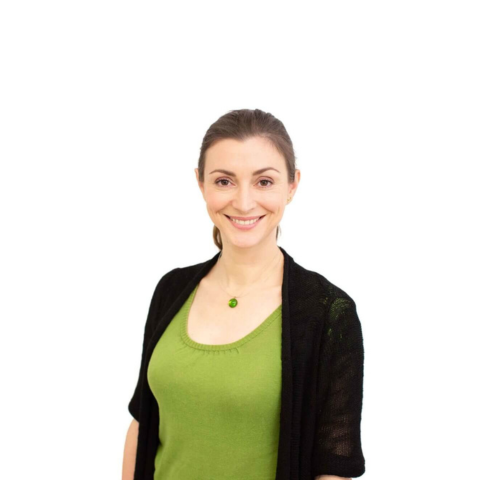
Dr Sophie Bouvresse...
… a dermatologist who trained at Paris VI University, treats both adults and children. Her dual practice in paediatric and adult medical dermatology makes her the natural choice for London’s French-speaking families, as well as for any patient who prefers to be seen in their mother tongue.
She consults in French and English.

Dr Kim Varma
Consultant Dermatologist trained in the United Kingdom, specialises in dermatological surgery and Mohs surgery. Her expertise is particularly valuable when a mole needs to be removed under the best possible surgical and aesthetic conditions.
She consults adult patients only.
This complementarity, medical follow-up with Dr Bouvresse in the first instance, surgical care with Dr Varma where needed, ensures a seamless continuity from diagnosis through intervention.
What to expect during a full body mole check
Your consultation begins with a clinical history. Your dermatologist will ask about your personal and family medical background, past sun exposure, any significant childhood sunburns, and the moles that concern you most.
The clinical examination follows. It can be focused on a specific lesion, or take the form of a full body mole check: the entire skin surface is then reviewed, including the scalp, skin folds and less visible areas such as the back or the soles of the feet. This comprehensive examination allows your dermatologist to establish a thorough baseline, which is essential for any meaningful long-term follow-up.
Several outcomes are possible at the end of the consultation. Most moles require no intervention: your dermatologist will simply recommend a suitable follow-up interval, usually once a year. Some lesions may call for closer monitoring or, more rarely, surgical removal for histological analysis. In this latter case, the continuity provided by dermatological surgery on site at Kensington International Clinic avoids the delays of an external referral.
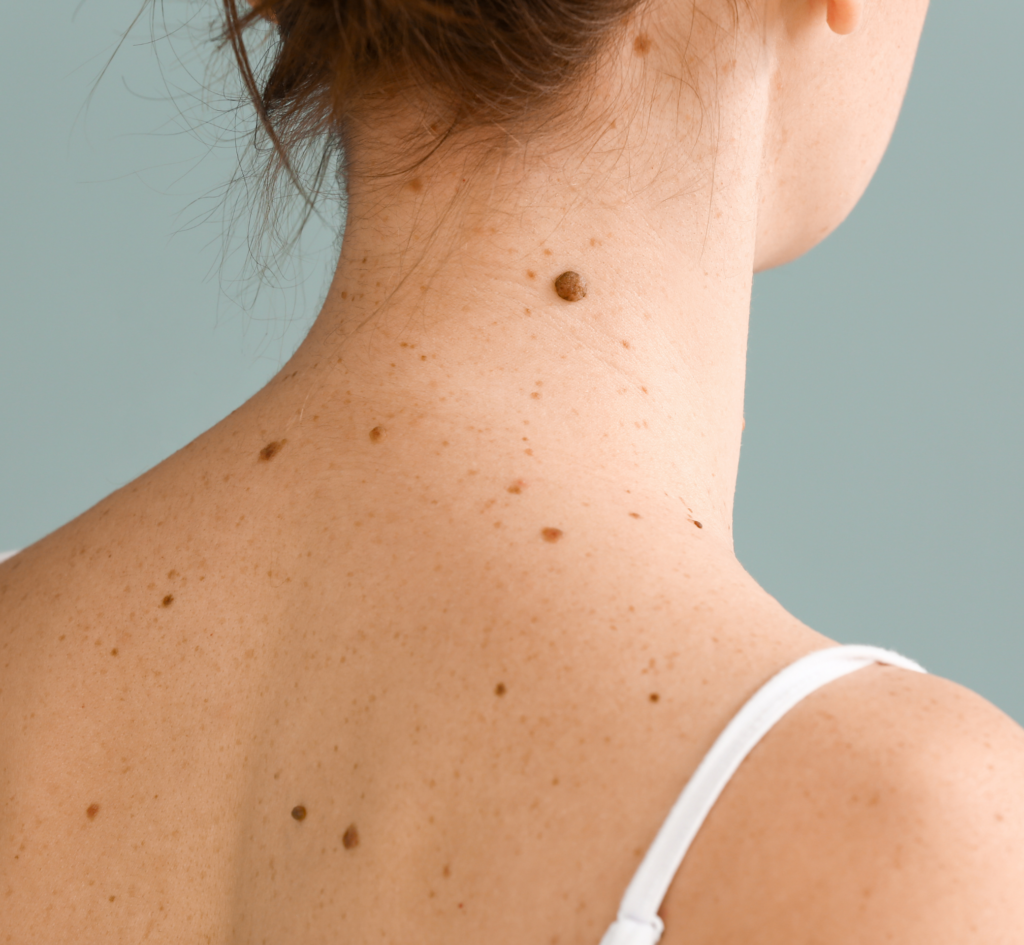
Mole mapping, tracking your moles over time
The principle of mole mapping is to map your moles in order to follow their evolution from one consultation to the next. Where a one-off check offers only a snapshot, mapping provides a reading over time: the exact location, size, shape and features of each lesion are documented, then compared at regular intervals.
This approach is particularly recommended for patients with a heightened vigilance profile: fair skin, numerous moles, a personal or family history of skin cancer, significant sun exposure, or simply a mole whose recent evolution raises concern. Mapped follow-up helps distinguish what amounts to routine change from what warrants closer examination.
At Kensington International Clinic, mole mapping is embedded in an ongoing relationship with the same dermatologist over time. This continuity is the key to effective follow-up: it is what allows a clinician to notice what a one-off review would miss.
When should you get a mole checked?
Not all moles call for the same level of vigilance. Certain signs should, however, prompt a consultation without delay:
- A change in size: a mole that visibly grows over a matter of weeks or months
- A change in shape or outline: edges that have become irregular, asymmetric or poorly defined
- A change in colour: several shades appearing within a single mole, or darker and lighter patches
- Bleeding, itching or persistent crusting in the affected area
- The appearance of a new mole after the age of 40
- A personal or family history of melanoma or other skin cancer
Beyond these warning signs, an annual check-up is recommended for patients with fair skin, a high number of moles, or a history of significant sun exposure. Parents concerned about their children’s moles are equally welcome to consult Dr Bouvresse, who receives paediatric patients for dermatology.
If your dermatologist concludes that a lesion should be removed for analysis, the procedure can be performed on site as part of Kensington Clinic’s dermatological surgery service.
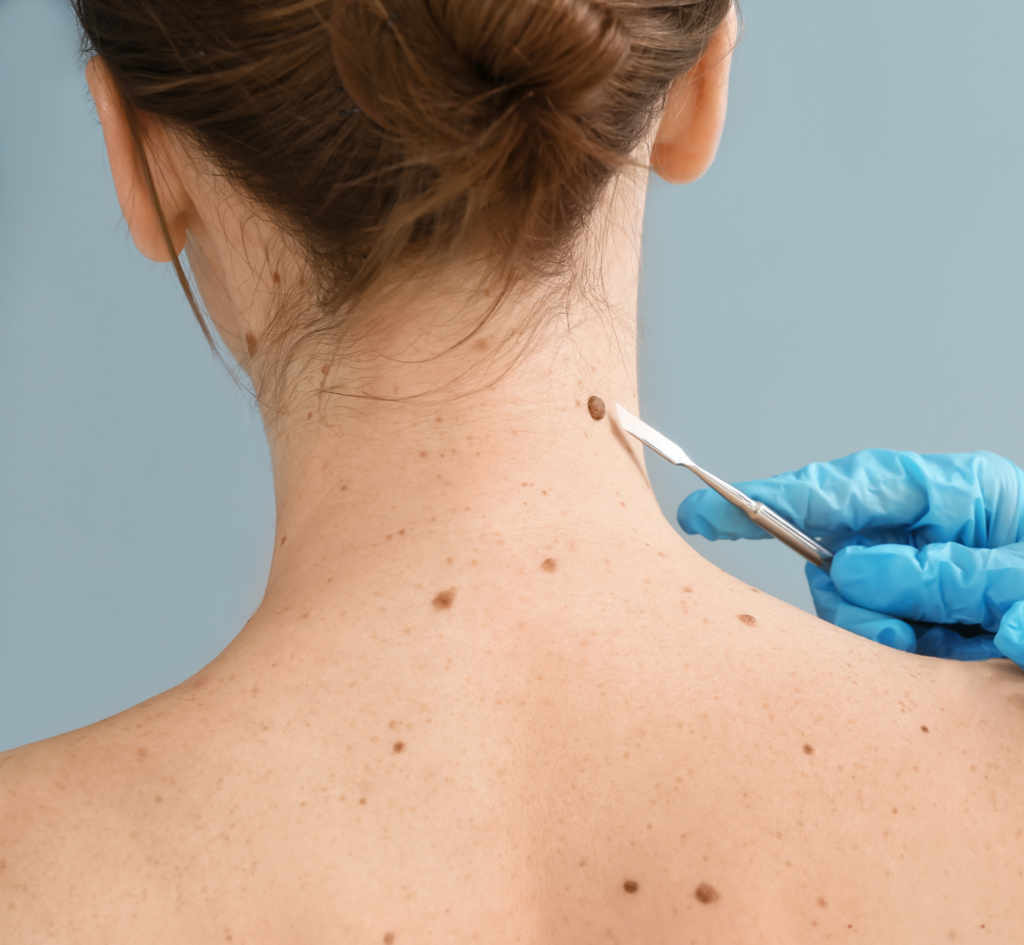
Skin cancer screening, a preventive approach
Skin cancer, and melanoma in particular, is among those cancers whose early management radically changes the prognosis. For this reason, regular mole checks are now considered a preventive act in their own right, on a par with cardiovascular monitoring or gynaecological screening.
KIC embraces this preventive approach. Our dermatologists see patients who come purely as a precaution, without any particular concern, as well as patients referred for a specific lesion that requires evaluation. In both cases the protocol is rigorous: clinical history, careful examination, reasoned decision, and a proposed follow-up plan.
Quick access to a consultation, continuity of follow-up with the same practitioner, and the option to proceed with surgical removal on site: these are the three pillars of effective skin cancer screening in a private clinic setting.
Mole check fees at Kensington International Clinic
Our clinic maintains full transparency on its fees. Below are the rates for consultations related to mole follow-up:
Type of consultation | Fee |
Initial dermatology consultation | £140 |
Full body mole check | £250 |
Follow-up consultation | £140 |
Surgical removal of a mole | £250 |
Some private health insurance policies, particularly those designed for expatriates, may cover all or part of a dermatology consultation. We recommend checking your cover directly with your insurer before your appointment.
Kensington International Clinic is located at 2 North Terrace, London SW3 2BA, a 6-minute walk from South Kensington station and 8 minutes from Knightsbridge.
We welcome patients from across Greater London as well as international patients, and consultations are available in French, English, Mandarin and Malay depending on the practitioner.
To book a consultation with Dr Sophie Bouvresse or Dr Kim Varma, please contact us by telephone on 020 7589 9321, by email at contact@kic.london, or directly through our online booking system.