

Acne isn’t just a teenage concern. At Kensington International Clinic, our dermatologists see adults every day who are dealing with persistent, late-onset or hormonal acne, as well as patients seeking treatment for acne scars that have become a daily source of self-consciousness.
In our private clinic near Chelsea, at the heart of London, we offer a comprehensive dermatological approach: accurate diagnosis, tailored prescription medication, laser treatment for acne scars and long-term follow-up.
Consultations are available in English, French, Mandarin and Malay depending on the practitioner.
A Team of
dermatologist
to treat adult acne
Three practitioners take care of adult acne at KIC, with complementary expertise across medical dermatology, surgical dermatology and scar revision.

Dr Sophie Bouvresse, dermatologist (adults and children)
Graduated from Paris VI Medical University in 2008, former intern and Head of Clinic-Assistant at Paris hospitals, member of the French Society of Dermatology and the British Association of Dermatologists. She is the lead practitioner for adult acne at Kensington International Clinic, with particular expertise in inflammatory skin conditions and hormonal acne.
Consultations in French and English.

Dr Kim Varma, consultant dermatologist (adults only)
14 years of experience at Nuffield Hospital Wolverhampton, now at Guy’s and St Thomas’ NHS Foundation Trust.
She manages severe and resistant forms of acne, including incision and drainage of deep nodulocystic lesions when medical therapy alone is insufficient.
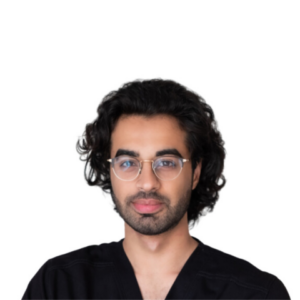
Dr Sultan Hussein, plastic and aesthetic surgeon
Trained at the Universities of Exeter and Oxford (graduated with distinction), with additional diplomas from Cambridge and the Royal College of Surgeons.
He is specifically trained in scar revision and manages atrophic and hypertrophic acne scars through a combined approach: fractional laser, intralesional injections and surgical revision when indicated.
Understanding adult acne:
causes and presentations
Adult acne affects between 20 and 40% of women and 12 to 20% of men over the age of 25. It can appear later in life with no history of teenage acne (late-onset acne), or persist from adolescence without ever clearing (persistent acne). In both cases, dermatological management relies on identifying the triggering factors before drawing up a tailored treatment plan.
Hormonal acne in adult women
Hormonal acne is the most common form of acne in adult women. It is recognisable by its typical location on the lower face (chin, jawline, neck), its cyclical pattern linked to the menstrual cycle, and the presence of deep inflammatory lesions, often cystic. Hormonal triggers include menstrual cycle fluctuations, polycystic ovary syndrome (PCOS), stopping oral contraception, perimenopause and certain hormonal treatments.
Hormonal chin acne is particularly characteristic: deep, painful, recurring lesions that are often resistant to cosmetic over-the-counter treatments. Depending on the hormonal profile, your dermatologist may recommend a blood test, a change in contraception, or a specific medical treatment.
Fungal acne vs hormonal acne: an essential differential diagnosis
Not all pustular breakouts are acne. Fungal folliculitis (Malassezia), often mistaken for resistant acne, presents as small uniform papulopustules that are highly itchy and resistant to standard anti-acne treatments. Distinguishing hormonal acne from fungal folliculitis is fundamental: the treatments are radically different. A dermatologist makes this diagnosis through clinical examination and, if needed, mycological sampling.
Adult male acne
Acne in adult men presents differently: lesions are often more extensive, also affecting the back, shoulders and upper chest, less cyclical but sometimes aggravated by stress, bodybuilding supplements (whey, creatine, anabolic steroids) or shaving habits. Treatment relies on a precise assessment of the background and lifestyle habits, in addition to standard dermatological treatment.
Severe forms: nodular and nodulocystic acne
Severe forms of acne, characterised by deep inflammatory lesions (nodules, cysts), carry a significantly higher risk of permanent scarring. They require prompt dermatological management to limit aesthetic sequelae. Depending on the case, treatment may combine an oral medical approach, intralesional corticosteroid injections to relieve inflammatory cysts, and close follow-up.
Prescription of acne medication for adults
Medical management of adult acne relies on a combination of topical and oral treatments, tailored to the severity, the type of acne and the patient’s profile. Only a dermatologist can prescribe the most effective treatments, most of which require a medical prescription.
- Prescription topical treatments: topical retinoids (adapalene, tretinoin), medical-strength benzoyl peroxide, topical antibiotics (clindamycin), azelaic acid. Applied locally according to a precise protocol, they target inflammation, follicular keratinisation and bacterial colonisation.
- Prescription oral treatments: oral antibiotics (doxycycline, lymecycline) are indicated in moderate to severe inflammatory forms, for controlled durations to limit the risk of bacterial resistance. For women with a confirmed hormonal component, hormonal therapy (anti-androgenic contraception, spironolactone) may be offered. The most severe, resistant or scarring forms may warrant a prescription of oral isotretinoin, a powerful treatment reserved for selected cases that requires rigorous medical and biological monitoring throughout the course.
- Supplements and skincare: certain supplements (zinc, myo-inositol for PCOS, probiotics) can be offered alongside medical treatment, never as a substitute. Skincare routines are adjusted during consultation to avoid comedogenic products and reinforce treatment efficacy.
Acne scar treatment in London
Post-acne scar management is one of the main reasons adults come to see a dermatologist at our private clinic. An acne scar is never trivial: it can have a lasting impact on self-confidence and become a real social barrier. Our dermatologists offer a personalised approach, tailored to the type and depth of the scars.
Types of acne scars
Not all acne scars are treated in the same way. Your dermatologist first identifies the scar type, as this directly determines the most effective treatment technique.
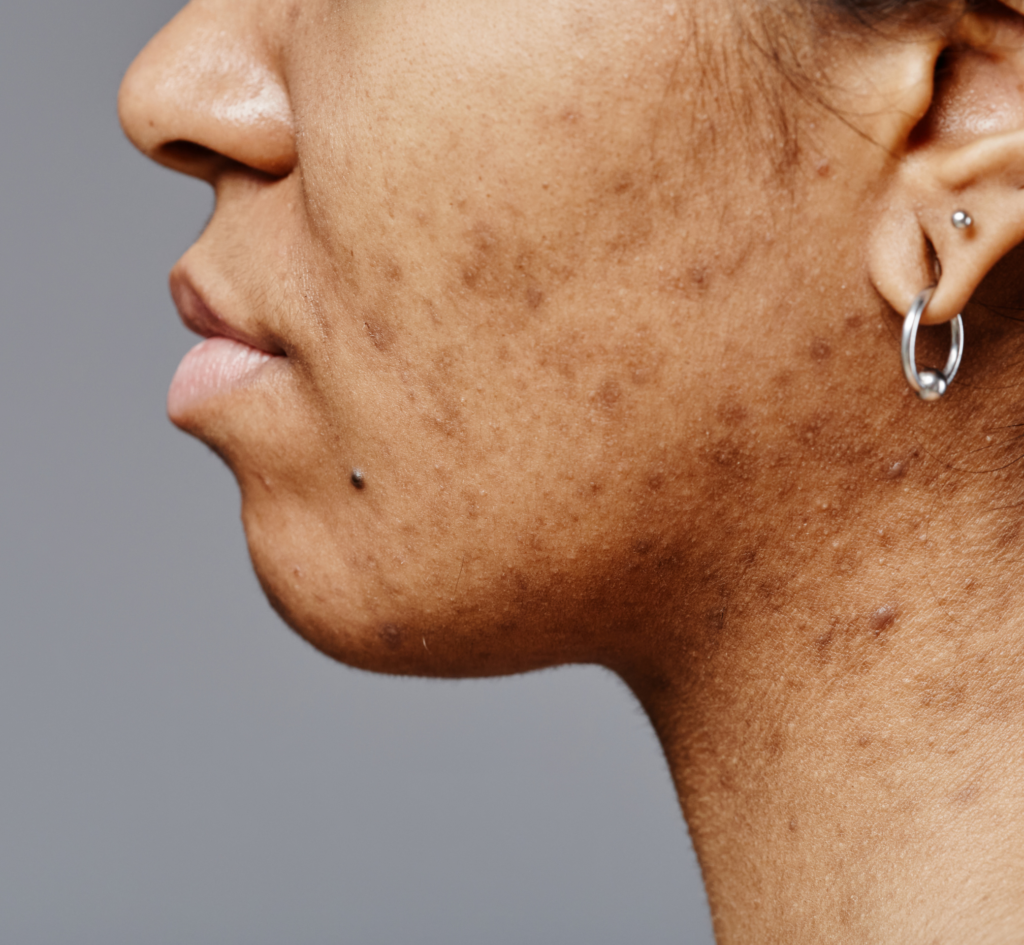
- Atrophic scars (depressed): the most common. These include ice pick scars (narrow and deep), boxcar scars (wide with sharp edges) and rolling scars (wavy and superficial).
- Hypertrophic scars: raised, red or pink, more frequent on the back and shoulders.
- Pigmentary scars: brown or red marks (post-inflammatory hyperpigmentation, post-inflammatory erythema), often mistaken for true scars when they actually fade spontaneously over several months.
Laser treatment for acne scars
Fractional laser is the reference treatment for atrophic acne scars. It stimulates dermal remodelling and collagen production, progressively filling in depressed scars. Several sessions are usually required, spaced 4 to 6 weeks apart, with visible results after 2 to 3 sessions and optimal results at 6 months. Laser can also be used to treat residual post-inflammatory hyperpigmentation.
At KIC, laser treatment for acne scars is performed by our dermatologists in our dedicated treatment room equipped with the K-Laser Blue Derma.
Other acne scar treatments
Depending on the type of scar, other techniques may be offered, either alone or in combination with laser:
- Medical microneedling (dermaroller): controlled micro-punctures that stimulate neo-collagenesis, effective on rolling and boxcar scars.
- Intralesional injections: corticosteroids for hypertrophic scars, hyaluronic acid to temporarily fill deep atrophic scars.
- Surgical revision: reserved for isolated, wide or particularly unsightly scars, with cosmetic suturing under local anaesthetic. Dr Sultan Hussein, plastic surgeon, is the lead practitioner for this type of procedure.
- Dermatological peels: high-concentration medical acids, for superficial scars and residual hyperpigmentation.
The treatment plan is defined with your dermatologist after clinical examination, taking into account skin type, scar nature and your personal constraints (availability, budget, sun avoidance).
What to expect during your acne consultation?
Adult acne management follows a three-step protocol designed for lasting results rather than a temporary clearing of lesions.
your dermatologist examines your skin, identifies the type of acne (inflammatory, comedonal, nodular, hormonal, mixed), assesses severity and investigates triggering factors (hormonal, drug-related, cosmetic, dietary). If a hormonal component is suspected, a blood test may be prescribed. For scars, dermoscopic examination allows precise typing of the lesions.
at the end of the consultation, your dermatologist provides you with a written treatment plan, including medication prescriptions, the adapted skincare routine, any additional tests and, where relevant, the laser session protocol. Expected results and possible side effects are explained in detail.
a first review appointment is scheduled 6 to 8 weeks after the start of treatment, to assess response and adjust if needed. Follow-up consultations are generally quarterly during the treatment phase, then more spaced in the maintenance phase.
Each stage can be adapted according to your medical profile, your history, and the decisions discussed in consultation. This personalisation of the protocol is precisely what makes the difference in outcomes!
Acne dermatologist Consultation fees in London
Consultation or procedure | Duration | Fee |
Acne dermatology consultation with Dr Sophie Bouvresse | 20 min | £140 |
Dermatology consultation + cleansing (acne) with Dr Sophie Bouvresse | 20 min | £190 |
Extended consultation with Dr Sophie Bouvresse | 45 to 60 min | From £450 |
Fractional laser session for acne scars | — | From £150 |
Intralesional corticosteroid injection | — | From £250 |
Blood tests (if prescribed) | — | Billed separately by the clinic |
Consultations with Dr Kim Varma, who specialises in complex and resistant dermatology cases, start at £300 for a standard 30-minute consultation and are detailed on our Dermatologist page.
Booking info: a £70 prepayment is required at the time of booking. The balance is settled on the day of your consultation.
Cancellation policy: full refund if cancelled more than 72 hours in advance; the £70 prepayment is retained between 48 and 72 hours; full consultation fee charged under 48 hours.
Certain private health insurance schemes, particularly for expatriates, may cover all or part of a dermatology consultation for acne when medically indicated.
FAQ
What is hormonal acne?
Hormonal acne is a form of acne directly linked to hormonal fluctuations in the body, particularly androgen hormones which stimulate sebum production. In adult women, it is characterised by deep lesions on the lower face (chin, jawline), recurring with the menstrual cycle, and often resistant to standard cosmetic treatments.
What causes hormonal acne?
Several factors can trigger or worsen hormonal acne: polycystic ovary syndrome (PCOS), stopping oral contraception, perimenopause, pregnancy, chronic stress, certain hormonal
Fungal acne vs hormonal acne: how do you tell them apart?
Lesions are not the same but need a dermatologist diagnosis.
Fungal acne (Malassezia folliculitis) is a pustular breakout often mistaken for resistant acne. It is distinguished by small, uniform, highly itchy papulopustules located on the forehead, chin, chest or back. Hormonal acne, by contrast, presents with lesions of varying sizes, deep, painful and rarely itchy. A dermatologist establishes the diagnosis through clinical examination and, if necessary, mycological sampling.
How to treat adult hormonal acne?
With a combined medical approach.
Treatment of hormonal acne relies on a combined approach: prescription topical treatments (retinoids, benzoyl peroxide), hormonal therapy in female forms (anti-androgenic contraception, spironolactone), and possibly oral isotretinoin in severe or resistant forms. Only a dermatologist can assess which combination is right for your situation.
Are supplements effective for hormonal acne?
Yes.
Certain supplements (zinc, myo-inositol for women with PCOS, probiotics) can provide an adjunctive benefit but do not replace an adapted dermatological treatment. Their use should be discussed during consultation to avoid interactions and target the right profiles.
How long does it take to see results on acne scars?
At least 3 sessions.
Laser treatment for acne scars requires several sessions (typically 3 to 6), spaced 4 to 6 weeks apart. Initial results are visible after 2 to 3 sessions, with continuous improvement over the 6 months following the end of the protocol. Treatment response depends on scar type, skin type and adherence to post-session instructions (strict sun avoidance in particular).