

Eczema is one of the most common dermatological conditions, and one of the most frustrating to live with day to day. Itching, redness, scaling, recurrent flare-ups that disrupt sleep and social life: behind a single generic term lies a range of distinct clinical forms, each calling for its own approach.
At Kensington International Clinic, a private clinic in the heart of London, Dr Sophie Bouvresse sees both adult and paediatric patients in dermatology consultation, to reach an accurate diagnosis, identify the triggers and put in place a personalised treatment plan.
Consultations are available in both French and English.
Dr Sophie Bouvresse
our eczema specialist dermatologist
at KIC
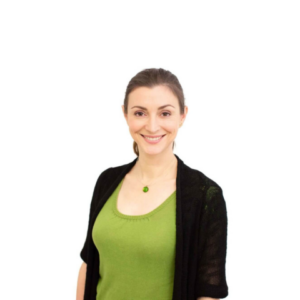
Dr Sophie Bouvresse, Lead Dermatologist
Dr Sophie Bouvresse is Lead Dermatologist at KIC. Her background combines an excellent French medical education with deep integration into the British healthcare system.
A graduate of Paris VI Medical University in 2008, she pursued specialist studies in Dermatology and Venereology the same year. Former Intern then Head of Clinic-Assistant at the Paris hospitals, she now works in both the NHS and private practice in London. She is a member of the French Society of Dermatology and the British Association of Dermatologists, a dual institutional affiliation that reflects the singularity of her Franco-British positioning.
Her clinical expertise covers medical dermatology for adults and children, with a particular interest in inflammatory skin conditions (eczema, acne, psoriasis), skin tumour detection and treatment, and surgical dermatology under local anaesthesia.
As a French-speaking dermatologist in London, she is a natural choice for the French-speaking community of the capital as well as for international patients.
Two eczema type,
two different diagnosis
Atopic eczema, the most common form
Atopic eczema, also known as atopic dermatitis, is the most widespread form. It most often sits within a family history of atopy: asthma, allergic rhinitis or eczema in parents or siblings.
It is characterised by red, dry, scaly patches accompanied by often intense itching. Its distribution evolves with age: the creases of the elbows and knees in adolescents and adults, the cheeks and extensor surfaces in infants and young children. Its hallmark is a course of flare-ups interspersed with periods of quiescence, with skin that remains overall dry and sensitive between episodes.
Care at Kensington International Clinic rests on a twofold logic: treating the current flare-up (topical corticosteroids tailored in potency to the affected area and the patient’s age, calcineurin inhibitors on certain zones), and establishing a sustainable emollient routine that reinforces the skin barrier between flare-ups.
For severe forms that resist conventional treatments, systemic therapies may be discussed.
Contact eczema and patch testing, identifying the triggers
Unlike atopic eczema, contact dermatitis is not a predisposition: it is a reaction. The skin develops a sensitisation to a specific substance, which then systematically produces eczema patches at the point of contact. The most common triggers are metals (nickel, chromium), cosmetic preservatives, fragrances, and certain components of gloves, cleaning products or professional tools.
Identifying the trigger is therefore the cornerstone of treatment. This is the purpose of patch testing, carried out at our private dermatology clinic as part of the work-up for suspected contact dermatitis. The principle: patches containing the most common allergens are applied to the skin of the patient’s back for 48 hours, and the skin reactions are then read at 48 and 72 hours. The result provides a precise list of substances to avoid.
Eczema by body area,
hands, face and scalp
Certain body areas are more prone to eczema, for reasons related to exposure, skin thinness or sebaceous gland density. Each calls for a nuanced therapeutic approach.
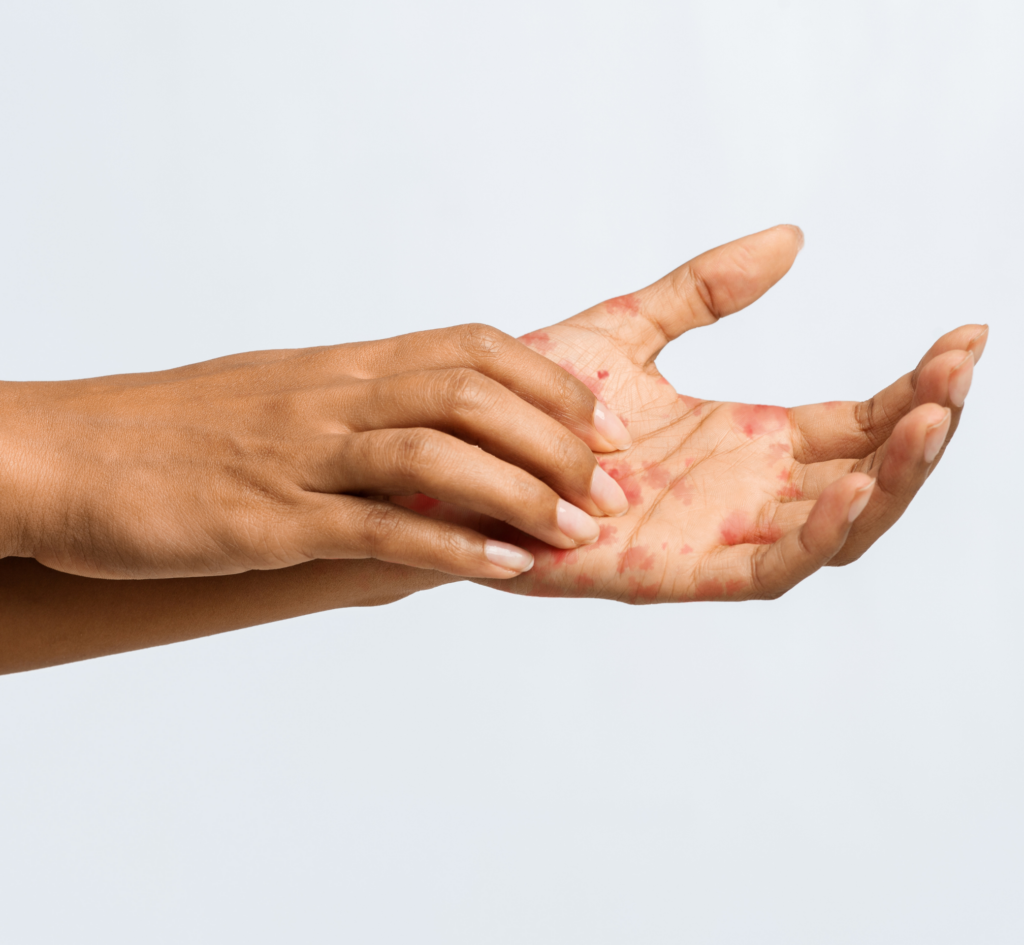
Hand eczema
Hand eczema is one of the most common and most disabling sites, especially for occupations that routinely expose the hands to water, detergents or chemical allergens. It may take the form of dry, cracked patches, or the small itchy vesicles characteristic of dyshidrotic eczema. Dr Bouvresse systematically assesses the occupational context and proposes a strategy combining hand protection, adapted topical treatment and, if sensitisation is suspected, a patch testing work-up.
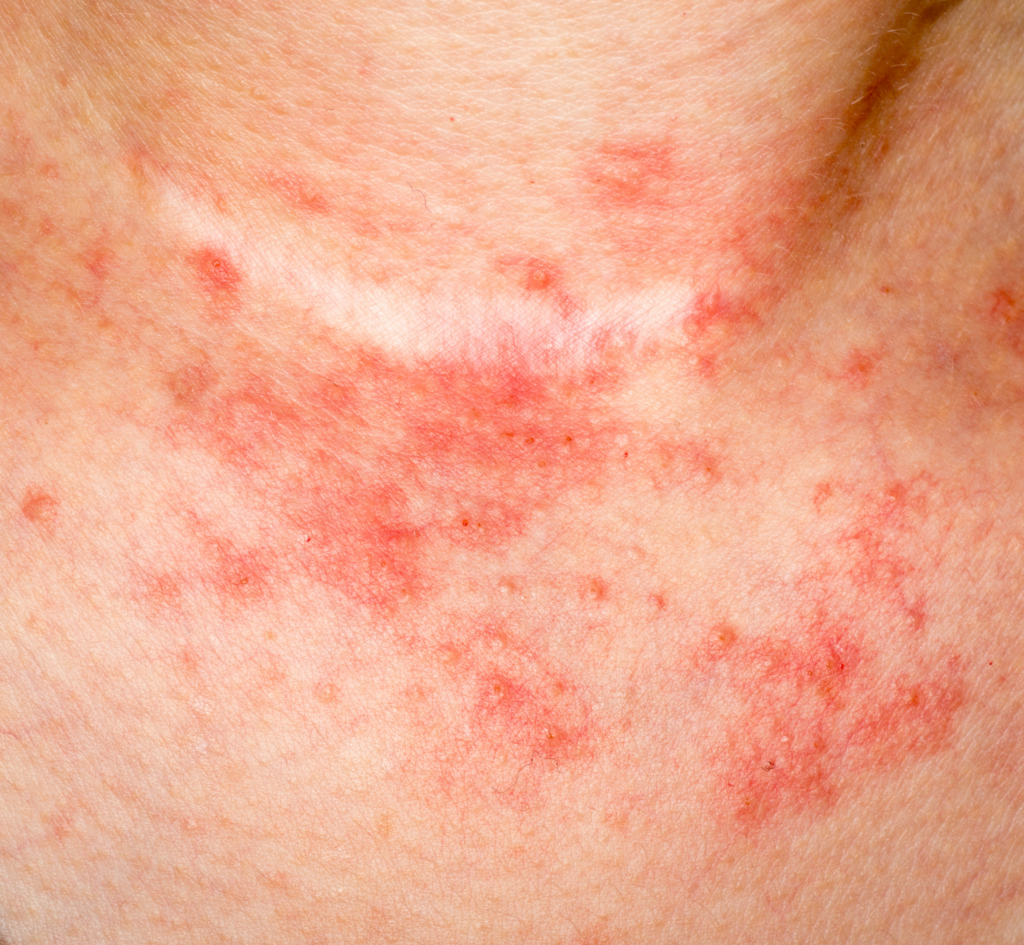
Eczema on the face
Eczema on the face calls for particular caution because of the thinness of the skin, especially on the eyelids. Corticosteroids are used sparingly and for limited durations, and calcineurin inhibitors come into their own on these sensitive areas. Identifying allergens from cosmetics, hair products or skincare routines is often decisive.
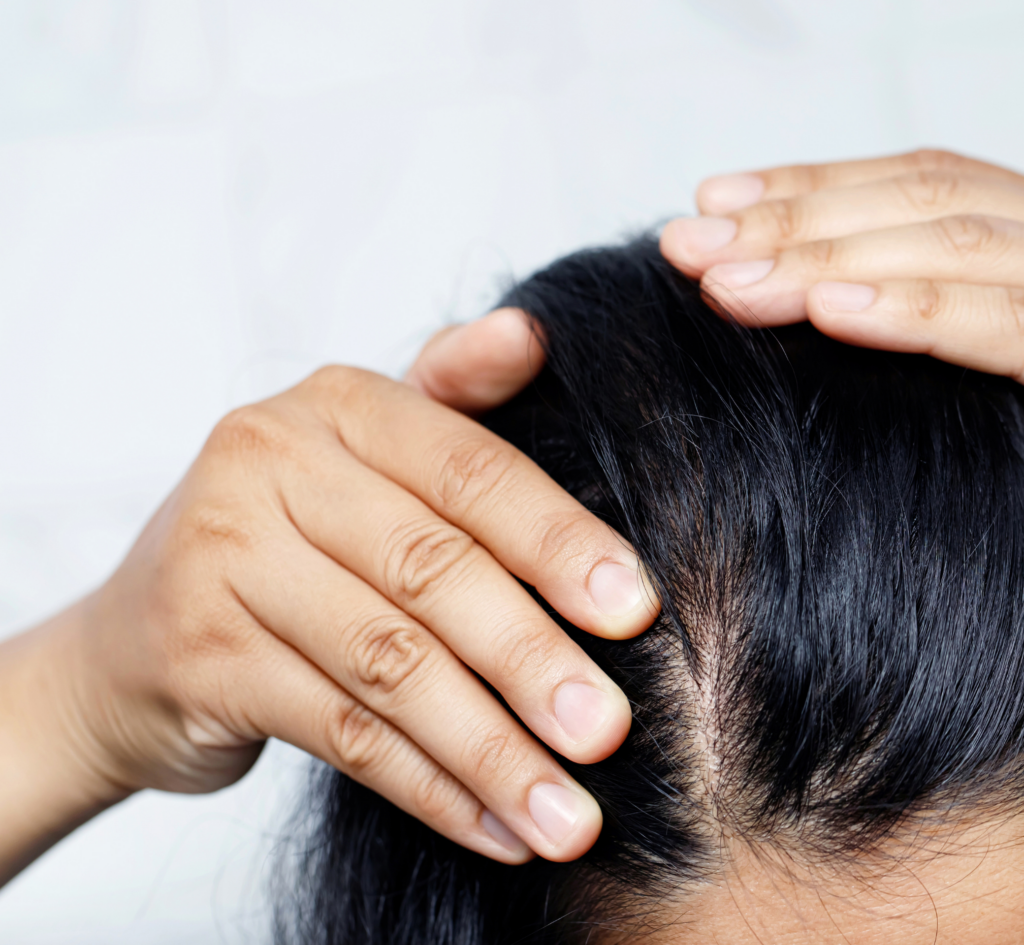
Scalp eczema
Scalp eczema, also referred to as seborrhoeic eczema when it occurs in a context of oily skin, presents as yellowish, sometimes greasy scales with itching. Treatment for eczema on the scalp and on the head combines medicated shampoos with, where necessary, short-course topical corticosteroid lotions. This form of eczema can extend onto the face (eyebrows, sides of the nose) and responds well to a comprehensive management plan.
Baby and childhood eczema, dedicated paediatric care
Atopic eczema affects as many as one in five children in Western countries, and begins before the age of five in the vast majority of cases. In infants, it typically appears as red, oozing patches on the cheeks and on the extensor surfaces of the limbs, with sleep disturbed by the itching.
Dr Sophie Bouvresse sees paediatric patients in dermatology consultation. Her dual adult and paediatric practice allows her to support families over time, including as the eczema evolves through the child’s growth. Care is built on three pillars: topical treatment tailored to age and location, a rigorous daily emollient routine, and parental guidance to help families understand the condition and take the anxiety out of flare-ups.
For French-speaking families in London, the option of a consultation in French on a subject as sensitive as a child’s health is often decisive. Consultations are of course equally available in English.
What to expect during your eczema consultation
The consultation begins with a thorough clinical history. Dr Bouvresse will explore your personal and family history of atopy, the onset and evolution of your symptoms, the triggers you have identified, the treatments you have already tried, and the impact on your sleep, your work and your daily life.
The clinical examination follows: careful inspection of the lesions, dermatoscopy when appropriate, Wood's lamp examination on specific areas. Depending on the clinical picture, patch testing may be scheduled to investigate a suspected contact dermatitis, or a skin biopsy may be performed on site if the diagnosis is unclear.
At the end of the consultation, your dermatologist will hand you a personalised treatment plan, explained in detail: prescriptions, emollient routine, avoidance of identified triggers, and an action plan for future flare-ups. A follow-up appointment is then scheduled within a timeframe suited to the severity and evolution of your eczema.
Each stage can be adapted according to your medical profile, your history, and the decisions discussed in consultation. This personalisation of the protocol is precisely what makes the difference in outcomes!
Eczema consultation fees at KIC
Kensington Clinic maintains full transparency on its fees. Below are the rates for consultations related to eczema:
Type of consultation | Fee |
Initial dermatology consultation | £140 |
Follow-up consultation | £140 |
Patch testing for contact dermatitis | £250 |
Skin biopsy | £250 |
Booking info: a prepayment of £70 is requested at the time of booking. The remaining balance is settled on the day of the consultation.
Cancellation policy:
- More than 72 hours in advance: fully refunded
- Between 48 and 72 hours: the £70 prepayment is retained
- Less than 48 hours: consultation fully charged
Some private health insurance policies, particularly those designed for expatriates, may cover all or part of a dermatology consultation. We recommend checking your cover directly with your insurer before your appointment.