

Early detection and genetic predisposition
At our Kensington Clinic in London, we offer a comprehensive range of cancer tests under rigorous medical supervision. Every test is prescribed and interpreted by Dr Ehsan Ghayoor Karimiani, consultant in genomic medicine (MD, MRes, PhD from the University of Manchester).
Three complementary tests are available, each tailored to a different screening intent:
- A 118-gene genetic panel for an overall view of oncological risk;
- A CTC liquid biopsy for early detection and follow-up;
- A hereditary predisposition genetic test for patients whose family history justifies a deeper evaluation.
Each test is CE-certified, accessible by self-referral, performed in an accredited laboratory and interpreted in a medical consultation.
The aim is never to replace conventional oncological care, but to add a predictive and personalised dimension to your prevention strategy, in London and beyond.
Why opt for private cancer screening in the UK?
In the UK, private cancer screening is for patients who want to go beyond the scope of NHS national programmes. In London, these programmes effectively cover certain common cancers (breast, bowel, cervical), at given ages and according to specific criteria.
Private medicine adds several extra layers:
- Self-referral access, with no need for GP referral, no waiting list, no eligibility criteria;
- Broader coverage: simultaneous analysis of dozens, or even more than a hundred, genes linked to oncological risk;
- Cutting-edge technologies: next-generation sequencing (NGS), liquid biopsy, detection of circulating tumour cells;
- Personalised interpretation by a consultant in genomic medicine, with a dedicated debrief and an individual action plan;
- Confidentiality and continuity of care typical of a private London clinical setting.
This approach does not replace NHS programmes. It complements them, by offering a more in-depth predictive and preventive dimension for patients who want to take the lead.
Which
cancer tests do we offer at the Kensington Clinic in London?
At the Kensington Clinic, three complementary cancer tests are offered under the supervision of Dr Ehsan Ghayoor Karimiani. Each addresses a different screening intent: a broad genetic panel, non-invasive early detection, or evaluation of hereditary predisposition.

Comprehensive cancer screening: 118-gene genetic panel
The comprehensive cancer screening is the most complete genetic panel offered at the Kensington Clinic. It analyses 118 genes simultaneously, all of them documented in the scientific literature for their role in oncological risk.
This full body cancer screening covers the main cancers with a hereditary component:
- Breast, ovaries, endometrium;
- Colon, stomach, pancreas;
- Thyroid, kidney, prostate;
- Melanoma and other rarer forms.
Method: next-generation sequencing (NGS) with CNV (copy number variants) analysis, coverage ≥ 99% at ≥ 20×.
Sample required: EDTA blood draw (5 ml).
Turnaround time: 15 working days.
Fee: £1,290.
This panel is for patients who want a broad genetic evaluation, without targeting a specific condition. It provides an overview that serves as a starting point for a personalised prevention strategy.

Early cancer detection test: CTC liquid biopsy at the Kensington Clinic
The early cancer detection test relies on a breakthrough technology: the CTC liquid biopsy (Circulating Tumour Cells). It detects circulating tumour cells in the blood, present in almost every cancer patient, including asymptomatic ones.
This test is suited to several patient profiles:
- Asymptomatic individuals seeking non-invasive screening;
- Patients starting or adjusting oncological treatment;
- Patients in remission requiring longitudinal follow-up;
- Patients for whom a tissue biopsy is not feasible;
- Patients with metastatic cancer requiring regular monitoring.
The examination fits into the multi cancer early detection logic: a single blood draw, with no radiation and no invasive procedure.
In London, the blood draw can be carried out at the clinic or, if you prefer, in the comfort and privacy of your home.
Fee: £1,290.
To note:
- This technology has been clinically validated on more than 40,000 participants.
- This test does not replace standard-of-care examinations (mammography, colonoscopy, etc.). It complements them, by adding a further dimension to screening and follow-up.
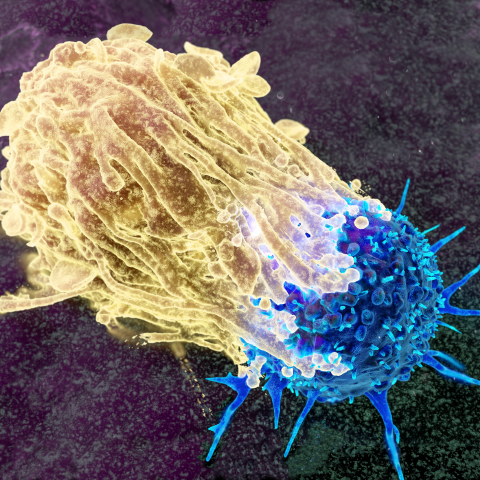
Cancer genetic testing: assessing your hereditary predisposition
Cancer genetic testing identifies the inherited genetic variants that increase the risk of developing certain cancers. It is particularly suited to patients whose family history suggests an inherited predisposition.
In the UK as elsewhere, private cancer genetic testing delivers several concrete clinical benefits:
- Identifying known pathogenic variants (BRCA1, BRCA2, Lynch syndrome, familial adenomatous polyposis, etc.);
- Adapting your personal surveillance strategy (frequency and type of examinations);
- Informing your relatives of a potentially inherited risk, which may justify a dedicated consultation;
- Guiding, where a cancer has already been diagnosed, personalised therapeutic decisions.
The test relies on next-generation sequencing (NGS) and analyses several genes associated with common hereditary cancers simultaneously. It is a complete hereditary cancer test, interpreted in a medical consultation.
Fee: £990.
For non-oncological genetic analyses (neurogenetics, premarital counselling, prenatal diagnosis, rare disease investigation), a dedicated pathway is offered at the Kensington Clinic. Each of these pathways is delivered through a specific consultation, distinct from the oncological screening presented here.
Booking a cancer test at the Kensington Clinic:practitioner, fees and appointments
Dr Ehsan Ghayoor Karimiani, your reference doctor in genomic medicine
Dr Ehsan Ghayoor Karimiani is a Consultant Medical Geneticist registered with the General Medical Council (GMC). He prescribes and interprets every cancer test offered at the Kensington Clinic.
His academic and clinical background is internationally documented:
- MD, MRes and PhD in medical genetics obtained at the University of Manchester;
- Honorary Lecturer at University College London (Neurogenetics Unit) and at St George’s, University of London;
- More than one hundred peer-reviewed scientific publications;
- Contribution to the discovery of several genes responsible for hereditary conditions.
Dr Ghayoor Karimiani consults in English, French and Persian. This linguistic openness makes him a trusted reference for the French-speaking community in London and for international patients.
How much does private cancer screening cost at the Kensington Clinic?
The price of private cancer screening in the UK varies according to the type of test, the depth of the panel and the level of medical follow-up.
At the Kensington Clinic London, fees are public and transparent:
Tests | Methods | Turnaround times | Fees |
Comprehensive cancer screening (118 genes) | NGS + CNV analysis | 15 working days | £1,290 |
Early cancer detection test (CTC Liquid Biopsy) | Liquid biopsy | To be determined in consultation | £1,290 |
Cancer genetic testing (hereditary predisposition) | Multi-gene NGS | To be determined in consultation | £990 |
The medical interpretation consultation is included for all three tests. It conditions the clinical value of the result: a laboratory report without medical interpretation is not enough to guide a preventive or therapeutic strategy.
Some private health insurance policies cover all or part of a private cancer screening uk cost when it is prescribed on documented medical grounds. We recommend that you check your cover with your insurer before booking.
The Kensington Clinic is located at 2 North Terrace, London SW3 2BA, a six-minute walk from South Kensington station and eight minutes from Knightsbridge. We welcome patients from Greater London, Europe and the rest of the world.
To book a consultation with Dr Ehsan Ghayoor Karimiani, please contact us:
- By phone on 020 7589 9321;
- By email at contact@kic.london;
- Directly through our online booking system.
What to know before your appointment:
- An initial medical consultation is required to determine the most suitable test for your situation;
- The blood draw is carried out on site, in just a few minutes;
- A debrief consultation is always organised once the results are available.
Consultations are available in English, French and Persian.
FAQ
Can a blood test detect cancer?
Yes, certain blood tests can detect cancer, but not all blood analyses are equal on this point.
Three main types of blood tests exist:
-
Standard blood tests (full blood count, basic markers): they may reveal abnormalities suggesting cancer (unexplained anaemia, very high erythrocyte sedimentation rate), but they never deliver a diagnosis on their own.
-
Specific tumour markers (PSA, CA-125, AFP, etc.): they are useful for monitoring already diagnosed cancers, but underperform in mass screening.
-
Liquid biopsy and detection of circulating tumour cells (CTC): this breakthrough technology directly detects cancer cells in the blood, including at early stages.
At the Kensington Clinic, the early cancer detection test relies precisely on this third approach, clinically validated on more than 40,000 participants.
What blood test shows cancer?
The most effective blood test for early cancer detection today is the CTC liquid biopsy. It stands apart from standard blood panels through its ability to directly identify circulating tumour cells.
Three criteria define a high-performance screening test:
- A technology validated by large-scale clinical studies;
- A capacity to detect cancers at an early, asymptomatic stage;
- A medical interpretation by a consultant qualified in genomic medicine.
Routine blood tests, such as the full blood test, may suggest an oncological lead, but never suffice to confirm a diagnosis.
What should you do if a cancer test result is positive?
A positive result is never an endpoint: it triggers a process of localisation, confirmation and tailored medical support.
At the Kensington Clinic, the post-result procedure unfolds in several steps:
- Identification of the Tissue of Origin: for certain cancers, the technology used can locate the likely site with good precision.
- Dedicated debrief consultation with our specialist to interpret the report and discuss next steps.
- Referral for confirmation examinations (targeted imaging, tissue biopsy, specialised oncology consultation).
- Coordination with your GP or the oncologist of your choice, depending on your preference.
The laboratory report is always interpreted by a doctor. It is never sent to you without clinical support.
Is the cancer test suitable for people who already have symptoms?
No. The cancer tests offered at the Kensington Clinic target prevention and follow-up, not diagnostic emergencies.
If you present symptoms suggestive of cancer, immediate specialist medical advice is the absolute priority.
These symptoms notably include:
- Persistent unexplained fatigue;
- Unintended weight loss;
- Persistent localised pain;
- Abnormal bleeding.
The cancer tests offered at the Kensington Clinic are designed for:
- Screening in asymptomatic patients focused on prevention;
- Longitudinal follow-up in patients in remission or under treatment;
- Predisposition evaluation in patients with a family history.
In the presence of symptoms, these tests never replace an emergency medical consultation. Our reference specialist can refer you to the right contacts if needed, but the clinical assessment comes first.
How much does private cancer screening cost in the UK?
The price of private cancer screening in the UK ranges from a few hundred to several thousand pounds. The exact figure depends on the depth of the panel and the technology used.
At the Kensington Clinic, three fee bands coexist:
- £990 for a cancer genetic testing of hereditary predisposition;
- £1,290 for a comprehensive cancer screening 118 genes;
- £1,290 for an early cancer detection test by CTC liquid biopsy.
The medical interpretation consultation is included. Some private health insurance policies cover all or part of the service when it is prescribed on documented medical grounds.
What is the difference between cancer screening and cancer genetic testing?
Cancer screening aims to detect an existing or developing cancer, while cancer genetic testing evaluates the hereditary risk of developing cancer.
Cancer screening looks for tumour cells or markers of cancer currently present in the body. It is suited to anyone wanting screening, whether asymptomatic or not, and provides an answer about the present state.
Cancer genetic testing identifies inherited variants that increase the risk, without presaging an already declared illness. It is suited primarily to individuals with a family history suggesting genetic transmission, and provides an answer about the future risk.
At the Kensington Clinic, these two approaches are complementary. Our specialist practitioner can combine both depending on your profile and clinical situation.
Kensington International Clinic: private medical care in the heart of London, delivered by a French and international team of reference.