

The respiratory analysis for identifying intolerances
The SIBO breath test is a non-invasive, quick and reliable examination that measures the gases produced by your intestinal flora. This approach is essential to diagnose a possible malabsorption or a bacterial overgrowth in the small intestine.
Prescribed in cases of chronic bloating, unexplained digestive disorders or multiple food intolerances, it is today the reference examination in functional gastroenterology.
At Kensington Clinic, four types of breath tests are available with quick access:
- The SIBO breath test, which is the most frequently requested in the UK;
- The hydrogen breath test for intolerances;
- The lactose breath test;
- The urea breath test for Helicobacter pylori.
All of them are prescribed and interpreted by our gastroenterologists practising at our private clinic.
What is a breath test and when is it prescribed?
A breath test, or respiratory test, measures specific gases in exhaled air after the ingestion of a specific substrate (sugar, labelled urea). The composition of the gases provides information on digestive function, the small intestine’s bacterial flora or the presence of a gastric infection.
This examination is prescribed in several situations:
- Chronic unexplained digestive symptoms (bloating, gas, pain, disrupted transit);
- Suspected bacterial overgrowth of the small intestine (SIBO);
- Suspected lactose or fructose intolerance;
- Suspected Helicobacter pylori infection;
- Post-antibiotic treatment follow-up to confirm bacterial eradication.
At Kensington Clinic, we carry out all the breath tests required depending on the clinical indication.
1 - SIBO breath test: detecting bacterial overgrowth in the small intestine
The SIBO breath test in the UK is the reference examination for diagnosing SIBO (Small Intestinal Bacterial Overgrowth), an abnormal proliferation of bacteria in the small intestine.
It is also one of the most frequently requested examinations at Kensington Clinic in private digestive medicine. In the UK, the SIBO breath test is indeed becoming more widespread, driven by a better recognition of the role of intestinal flora in numerous functional disorders.

What is SIBO?
SIBO (Small Intestinal Bacterial Overgrowth) refers to an abnormally high quantity of bacteria in the small intestine.
When these bacteria come into contact with ingested sugars, they generate hydrogen and methane through fermentation.
These two gases, which pass into the bloodstream before being exhaled, are precisely what the SIBO breath test measures.
What exactly does the SIBO breath test measure?
The test simultaneously measures two gases: hydrogen and methane. After ingestion of a dose of lactulose or glucose, breath samples are collected every 15 to 20 minutes for 2 to 3 hours.
This dual measurement is essential, because SIBO comes in two clinical forms:
- The hydrogen form, associated with bloating and diarrhoea;
- The methane form (IMO, Intestinal Methanogen Overgrowth), associated with chronic constipation.
A positive methane breath test therefore points towards a different treatment approach and guides the choice of antibiotic therapy.

When is it prescribed?
The most frequent clinical indications are:
- Chronic bloating that does not respond to dietary changes;
- Insufficiently controlled functional digestive disorders;
- History of abdominal surgery or chronic gastritis;
- Multiple food intolerances that have developed progressively;
- Rosacea or fibromyalgia associated with digestive disorders.
A preliminary consultation with a gastroenterologist confirms whether the test is appropriate.
How reliable is the SIBO breath test?
The reliability of the test depends mainly on two factors: the substrate used (glucose is generally preferred for its better specificity) and the rigour of the dietary preparation.
Careful medical reading of the result, carried out by an experienced gastroenterologist, remains essential to avoid false positives and false negatives.
The quality of a SIBO breath test in the UK relies as much on these precautions as on the laboratory protocol itself.
2 - Hydrogen breath test : identifying a malabsorption or an intolerance
The hydrogen breath test (or H2 breath test) is based on a simple principle: sugars that are poorly absorbed in the small intestine ferment in the colon and produce hydrogen, which passes into the bloodstream and then into exhaled air. Measuring this hydrogen therefore reveals a malabsorption.
Depending on the substrate administered, the test explores different conditions:
- Lactulose or glucose for SIBO;
- Lactose for lactose intolerance;
- Fructose for fructose malabsorption.
Only the nature of the sugar tested changes.
3 - Lactose breath test : confirming lactose intolerance
The lactose intolerance test is based on the same principle as the hydrogen breath test. It is then referred to as an H2 breath test applied to lactose: after ingestion of a standardised dose of lactose, the exhaled hydrogen is measured every 15 to 30 minutes.
A significant rise in hydrogen levels, associated with digestive symptoms (bloating, gas, diarrhoea), confirms a lactase deficiency.
Similar tests explore fructose or sorbitol intolerance, with a protocol adapted to the substrate.
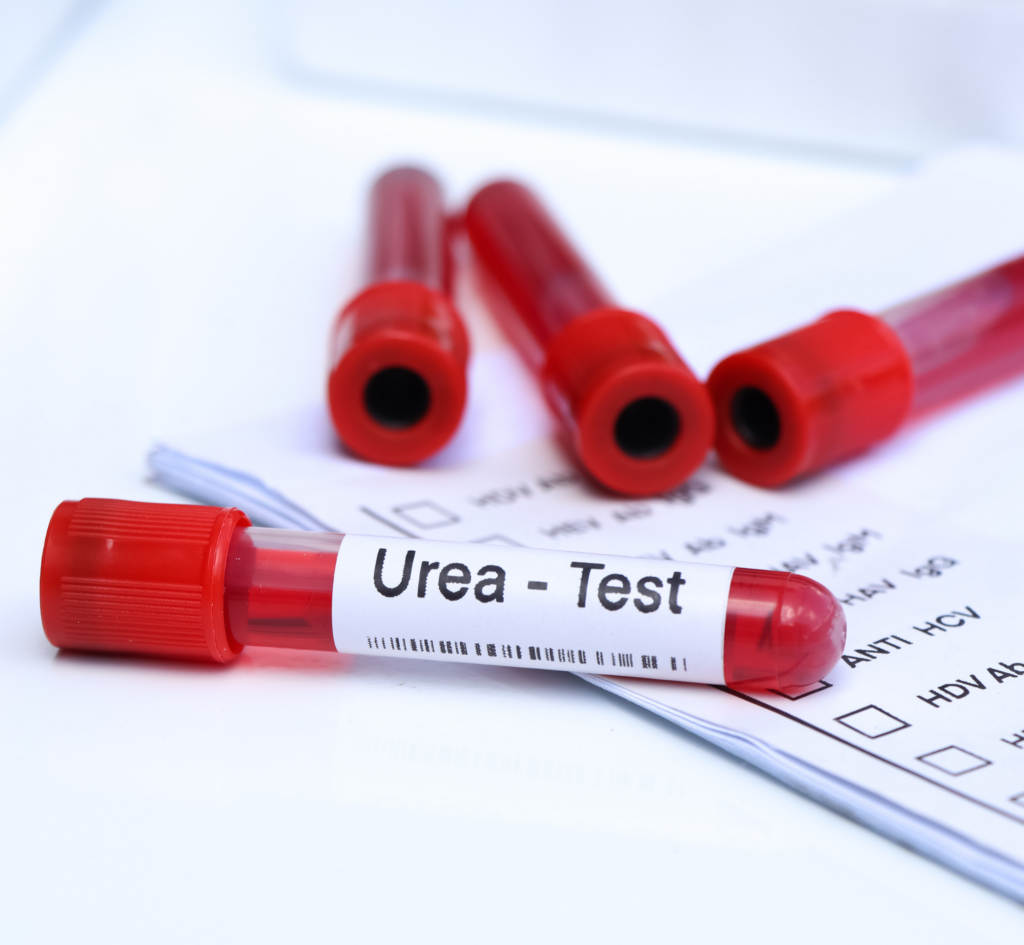
4 - Urea breath test : screening for Helicobacter pylori infection
Helicobacter pylori infection, often abbreviated to helico pylori, is a major cause of chronic gastritis, gastric and duodenal ulcers, and also a recognised risk factor for stomach cancer. The urea breath test is the non-invasive reference examination for its diagnosis.
The principle is based on the ingestion of urea labelled with carbon 13, a non-radioactive isotope. In the presence of the bacterium, the urea is broken down and releases labelled CO₂, detected in exhaled air. The breath test for H. pylori is one of the most reliable non-invasive tests in gastroenterology, both in terms of sensitivity and specificity. This is why it is recommended by the leading medical societies, as a first-line test as well as for post-treatment follow-up.
The test is also used to confirm bacterial eradication after antibiotic treatment, 4 to 6 weeks after the end of the treatment.
How to prepare for a breath test: the rules to follow
Proper preparation ensures the reliability of the test. Any non-compliance can lead to a false positive or false negative result.
ELEMENT TO SUSPEND | TIMING BEFORE THE TEST | TESTS CONCERNED |
Antibiotics | 4 weeks | All |
PPIs and antacids | 2 weeks | Urea breath test |
Probiotics | 1 week | SIBO, hydrogen |
Low-FODMAP diet | 24 to 48 h | SIBO, hydrogen |
Solid food | 8 to 12 h (fasting) | All |
Smoking and intense exercise | 2 h | All |
The specific instructions will be provided to you in writing when booking your appointment, tailored to the test prescribed.
SIBO breath test in the UK: the process at Kensington Clinic
Your care takes place in three stages:
1. Before the test
A preliminary consultation with one of our consultant gastroenterologists confirms the indication and provides the tailored preparation instructions.
2. During the test
A baseline breath sample is collected, then the substrate is ingested (lactulose, glucose, lactose or labelled urea). Samples are then taken every 15 to 30 minutes for 2 to 3 hours, depending on the protocol.
3. After the test
The samples are analysed and interpreted by your gastroenterologist. A follow-up consultation explains the result and, where necessary, sets out a treatment plan.
Book an appointment
Kensington Clinic is located at 2 North Terrace, SW3 2BA, a six-minute walk from South Kensington.
To book an appointment for a SIBO breath test in the UK, please contact us on 020 7589 9321, by email at contact@kic.london, or via our online booking system.
FAQ
What is a SIBO breath test in the UK used for?
The SIBO breath test in the UK detects an abnormal bacterial overgrowth in the small intestine. Its main clinical uses are:
- Establishing an objective diagnosis from a breath sample, without an invasive procedure;
- Identifying the dominant gas profile (hydrogen, methane, or mixed), useful for tailoring the treatment;
- Guiding the prescription of targeted antibiotics such as rifaximin or neomycin;
- Assessing post-treatment bacterial eradication through a control test.
Interpreting the result remains the responsibility of a gastroenterologist, who will correlate it with your complete clinical picture.
How long does a SIBO breath test in the UK take?
A SIBO breath test takes between 2 and 3 hours in total:
- Baseline fasting sample: 5 minutes.
- Ingestion of the substrate (lactulose or glucose): 5 minutes.
- Regular samples every 15 to 20 minutes for 2 to 3 hours.
- Administrative time and explanation of the results: 15 minutes.
During the test, you remain comfortably seated at the clinic, with no physical activity or food allowed.
What foods should be avoided before a hydrogen breath test?
In the 24 to 48 hours before a hydrogen breath test (SIBO or intolerance), it is recommended to avoid:
- High-fibre foods (pulses, wholegrains, cruciferous vegetables);
- Dairy products (unless the test specifically targets lactose);
- Fermentable fruits (apples, pears) and sweeteners (sorbitol, xylitol);
- Fizzy drinks, alcohol and fruit juices;
- Any dietary supplement containing fibre or prebiotics.
In the 8 to 12 hours preceding the test, only still water is allowed. Any dietary deviation can distort the result.